There Is No 13


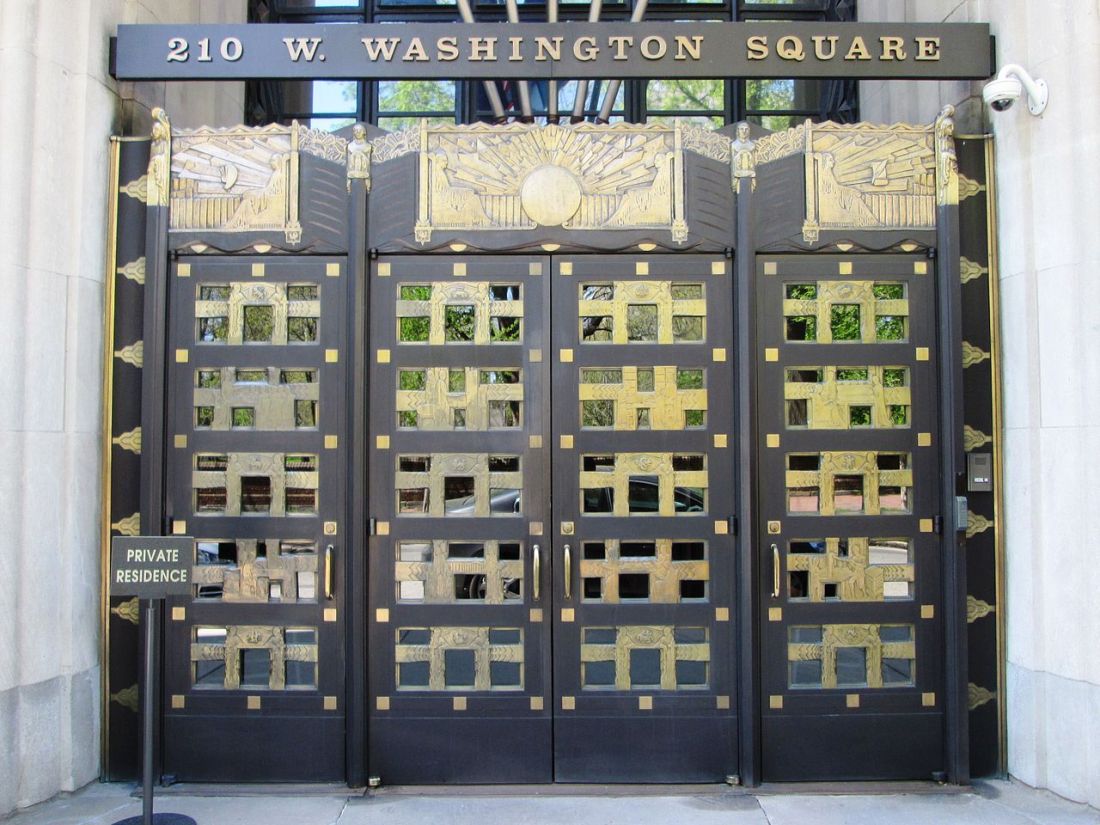
N.W._Ayer_&_Son_Building_210_West_Washington_Square_entrance.jpg

My first agency job began during 1973 at N.W. Ayer & Son in Philadelphia. It was the first advertising agency in the US, founded April 1, 1869. That’s not an April Fool’s joke.

Headquarters at 210 West Washington Square was, and still is, an Art Deco masterpiece. To enter, you walk through amazing cast bronze doors with signs of the zodiac. Soaring lobby walls were clad in marble, dramatically impressive in grandeur.
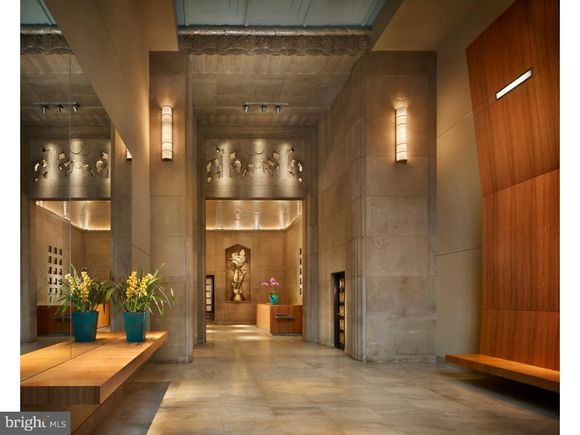
 

127_PAPH101638_1_1559905151_636x435.jpg

Nearly fifty years ago, there was only one elevator for people. The passenger elevator opened and closed with an internal a gate. There were no buttons to push yourself. All was operated by professional attendant who handled everything safely and easily. Her name was Betty. We greeted each other in the morning, and bid farewell at night.

Some folks did not greet Betty in a personal way, but merely stated the floor they wanted. She would nod politely and proceed. Over time I noticed that people who did not offer a personal greeting were treated to seeing extra floors before arriving at their destination. For being friendly with Betty, I was lifted to my floor without delay.

There’s an important life lesson to be learned there for anyone who cares to derive it.

Elevator Operator.jpg

One day, I entered the elevator from the 7th floor where I worked, greeted Betty, and asked her to take me to the “executive floor” at the top of the building. Exiting the elevator, I was amazed at the sight of magnificent oriental rugs on the floor, chippendale furniture, mahogany walls, and a hushed atmosphere overall. I delivered a package to the CEO’s secretary and returned to the elevator.

When Betty opened the door, I walked in and expressed a “wow” at what I’d seen. Betty smiled, nodded, and commented, “The 14th floor is like no other.” I replied that I’d only counted 13 floors on the outside of the building. She chortled and said, “There is no 13!”

Next, Betty continued, “We go straight from floor 12 to floor 14, because Mr. Ayer considered the number 13 to be unlucky. And he was the boss.” It’s good to be boss.

There’s a life lesson there, too. But maybe only if you build your own headquarters.
Which Half Is Wasted?

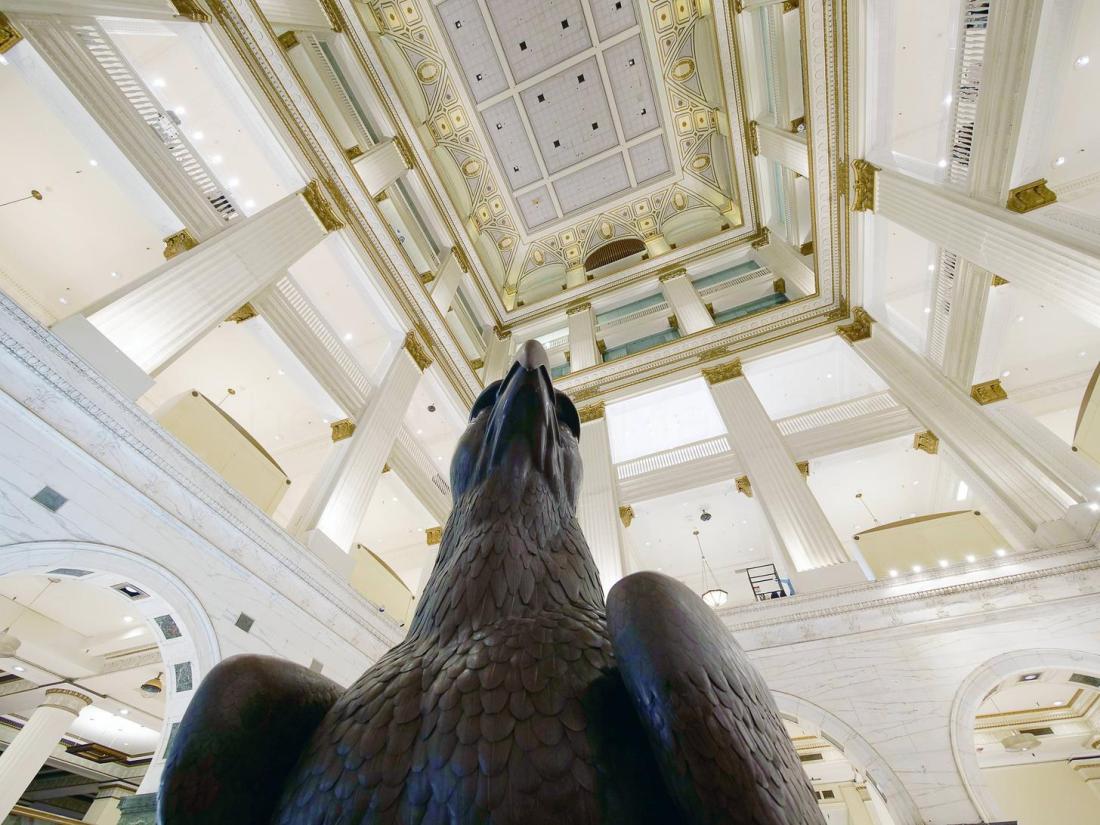
My first advertising work after graduating from Rutgers was at John Wanamaker’s headquarter store in the heart of Center City, Philadelphia. The location was, and is, a stunning edifice, where Philadelphians purchased their heart’s desires for a century.

The local expression of shoppers was simply, “Meet me at the Eagle.”

TFGJrR1r.jpgEveryone automatically knew this meant the Wanamaker eagle at the center of his store.

I began as a “proof runner.”  This meant I would take a paper draft of the next day’s newspaper ad to various merchandise managers, who would need to sign their names, to certify the merchandise was in stock, accurately priced, and fairly described.

The next day, before the doors would open, I would stand in a balcony portico, overlooking the main doors on the lobby level. When a bell rang, the doors were unlocked, and early shoppers entered eagerly, their Philadelphia Inquirers in hand.

The power of advertising was viscerally evident, as exciting for me to visually witness, as it was for shoppers to pursue. I was hooked then, with work that made my heart pound.

I learned there that Mr. Wanamaker once opined, “Half the money I spend on advertising is wasted … the problem is I don’t know which half.”

The rest of my five decade career was dedicated to the determination that the time and energy I invested in advertising would be for the half that was NOT wasted.

For Whom The Bell Tolls

09_2011_elec_141.jpg

In 1984, Federal Judge Green issued his decree to break up Bell System, the regulated monopoly that was America’s phone company for generations. Its local assets were divided among 7 new “Baby Bells” (Regional Bell Operating Companies) who also received rights to use the household name “Bell” in their operations and marketing.

AT&T Corporation retained ability to provide long distance service. But AT&T did not retain “Bell”, by which those services had always been known. Bell was a familiar entity; AT&T was a relative unknown, only a watchword to stock holders and Wall Street.

Before AT&T could successfully market its long distance service (now in a market-crowd of new entrants), it needed to transfer public “good will” long associated with Bell to AT&T – without using the name Bell, which AT&T was no longer legally entitled to use.

An unprecedented, complex marketing problem. Solved through ad agency, N.W. Ayer.

While establishing a new ad campaign spokesperson and look, AT&T retained the famed ad slogan from its previous Bell days: “Reach Out and Touch Someone.” This theme and its related music paved the way for the new public brand to bridge over existing equities.

Earlier market research demonstrated that “Bell” was by far the most recognized name for telephone services. Subsequent market research demonstrated that “AT&T” ran neck and neck with “Bell” for public awareness, with new entrants far below at that time.

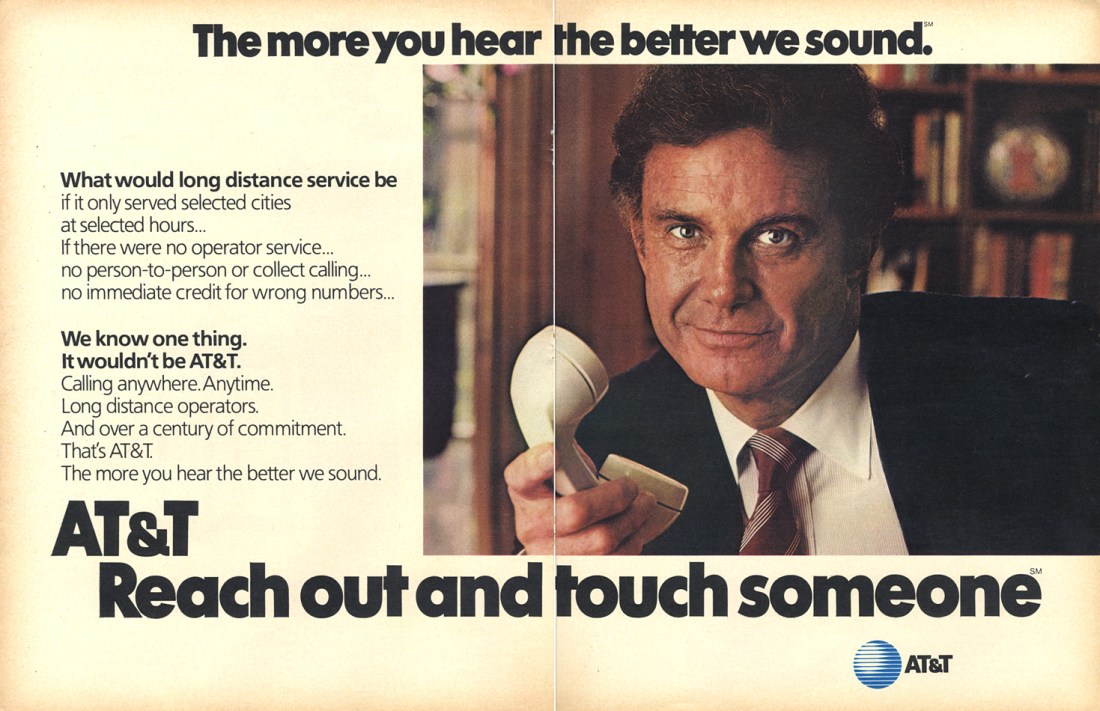
Actor Cliff Robertson was selected to star in the new “Reach Out and Touch Someone” campaign for AT&T,  His Q Score was high (familiarity & integrity). His famed movie role was playing JFK in PT-109. An American Hero + A Trusted Actor + A Beloved Theme = AT&T, the phone company America had known and used for generations.

Someday, I will post about other AT&T experiences and campaigns. For the moment, I will move on to other recollections about other agencies and other clients. But not before including this chart to show the recent outcome of Judge Green’s breakup decree.

Screen Shot 2020-01-29 at 12.52.23 PM.png

Joey Called This Morning

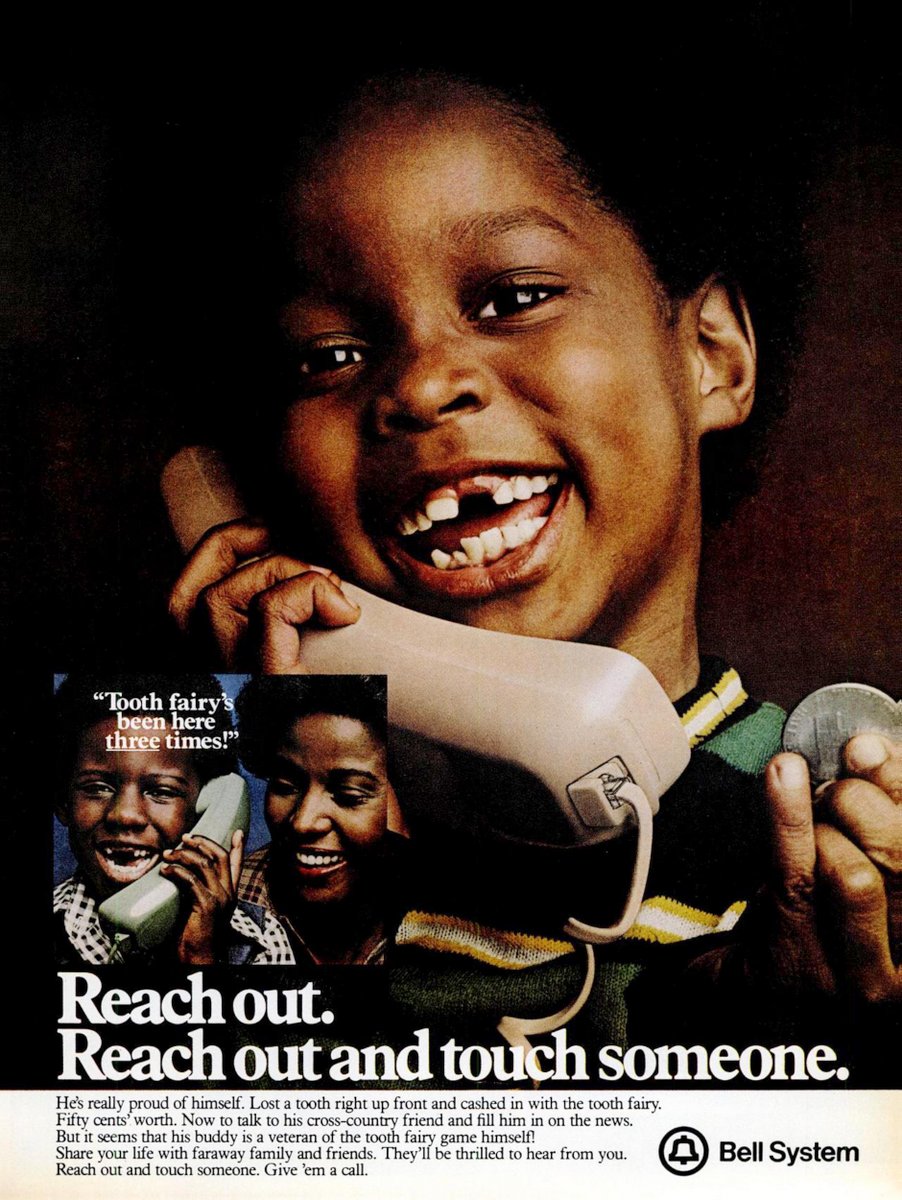
Reach-out-and-touch-someone-Tooth-fairy-1979.jpg

Of the hundreds of advertising campaigns I worked on over my five decade career, this one probably made the most massive impact over the shortest period of time.

We learned in ethnographic research that long distance callers heard an “invisible time clock” ticking in their heads, which even interfered with their intentions of making calls. That was because LD calling was charged by both duration and distance. We needed to find a way to lower this perceptual barrier.

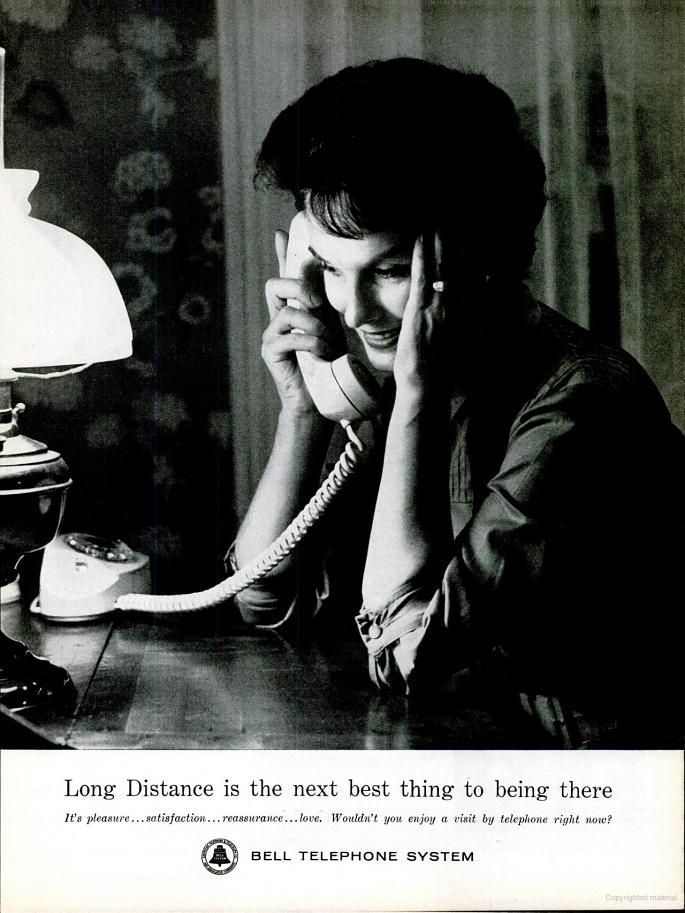
The previous campaign, “The Next Best Thing To Being There,” unintentionally raised the barrier. It amplified realizations that in-person contact is the best thing, even though family and friends may be separated by big geographical distances that prevent contact.

The magic word that unlocked the solutions to the puzzle was “touch.”

Colloquially, people were long used to saying to each other “let’s stay in touch.” This expression conveys deep human needs to maintain connections with those who matter. The word touch implies an instant connection even without close physical proximity. Even more importantly, the emotional benefits of “touch” are … well … touching. Powerful motivational messages could leap to life from this conceptual wellspring.

This potential was sparked by starting with a call-to-action preceding touch: “Reach Out.” It’s as if there’s no distance between the person calling and the person answering.

This insight led to print ads showing both the caller and the receiver on the same page. And copy featured ordinary incidents of daily life that continually nourish relationships. People didn’t need to wait for “big news” when they really just wanted to stay in touch.

TV spots could even feature only the people who receive calls, to demonstrate how much they meant emotionally to the receiver. One of the best is famed as “Joey Called.” Feast your eyes and ears on this masterpiece. It still deeply connects with hearts and minds.

For measurement of campaign effectiveness, market share was not the issue, because Bell System was a government-regulated monopoly. However, volume and duration of LD calls could be compared in matched A/B markets (with/without advertising presence of this campaign) to assess its impact. The effects were phenomenal, both in immediacy and sustainability of increases. Eventually, to calculate lasting financial impacts, MIT’s Sloan School came on board with complex computer algorithms to reveal the answer.

In its first year, Bell LD system-usage revenues increased by billions (even after all the decades since then, I don’t feel its my place to quote the actual amount, but it was huge).

We were proud of that – and prouder of the human contact we moved people to make.


Ups & Downs in Gotham

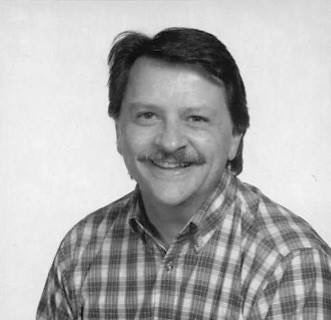
Below is a portrait of the adman as a young man. Yes, I was young once. The polaroid is courtesy of our agency photographer, the fabulous Carl Rulis. He was taking test shots of lighting, in preparation for shooting agency big wigs. I was no such thing at that time.

IMG_0207.jpg

By the mid-seventies, our company headquarters moved from Philadelphia to New York. N. W. Ayer was located at 1345 Avenue of The Americas in The Burlington House. The skyscraper was owned by the first billionaire I ever met. His name was Daniel K. Ludwig.

Mr Ludwig kept his own floors in the building, his own pool in its basement, and his own private elevator bank. No one ever saw him, except for his personal staff. But one day I accidentally met him. His private elevator wasn’t working. So he took another. When it reached our floor, the man who was pushing Mr. Ludwig’s wheel chair, held up his hand as if to signify “stop.” But I got on anyway. Having once seen the magnate’s photo in the New York Times, I recognized him. Being polite, I turned to say, “Good day, Mr. Ludwig.” He glanced at me and scowled. We three returned to looking at the floor numbers above the doors, as one is supposed to do in NY elevators. The unwritten rules are “face forward, look up, stay silent, no eye contact.” Gregarious me is just a rule-breaker. When the elevator opened on the ground floor, I exited, then saying, “Good bye, Mr. Ludwig.”

Next, a memory of taking that elevator up. About 10 people entered on the ground floor, following the unwritten rules recounted in the paragraph previous. In silence, we rose. The elevator doors opened on the next floor. Suddenly and involuntarily, audible gasps of air shot from the lungs of the women in the car. A man walked in. Flashing his famed million-dollar grin, he briefly scanned the car, and chortled, “Hello, ladies!” Then he turned to face forward, look up, and wait to get out on the next floor. He turned and waved. What followed was a loud exhalation of collective breath in the elevator, as women exclaimed, “That was Cary Grant!!” It turns out he was a board director of Faberge, which was headquartered at Burlington House.

Such are the ups and downs of elevator rides in mid-town Manhattan.

Once Upon A Chime

300px-Bell_System_hires_1969_logo_blue.svg.png

There was only one phone company. It was known as Bell System. It was a federal government regulated monopoly. It was so ubiquitous and universal, that people tried to humanize it by calling it “Ma Bell.” Phones had cords, and they all came from Bell. If you wanted to make a local or long distance phone call, you had one choice: Bell System.

With no direct competition in telephony, the main purpose of advertising was to encourage people to use the telephone to make calls. Local calls burgeoned. Long distance calls lagged. Why? Because LD calls were charged both by time and distance. This made perfect sense from Bell’s perspective, as the sole operator utilized its system assets which were measured by time and distance – it cost a lot to install and maintain wires and switches. Since profits were limited and regulated by government, the Bell System could not be tempted to raise prices without explicit permission to do so.

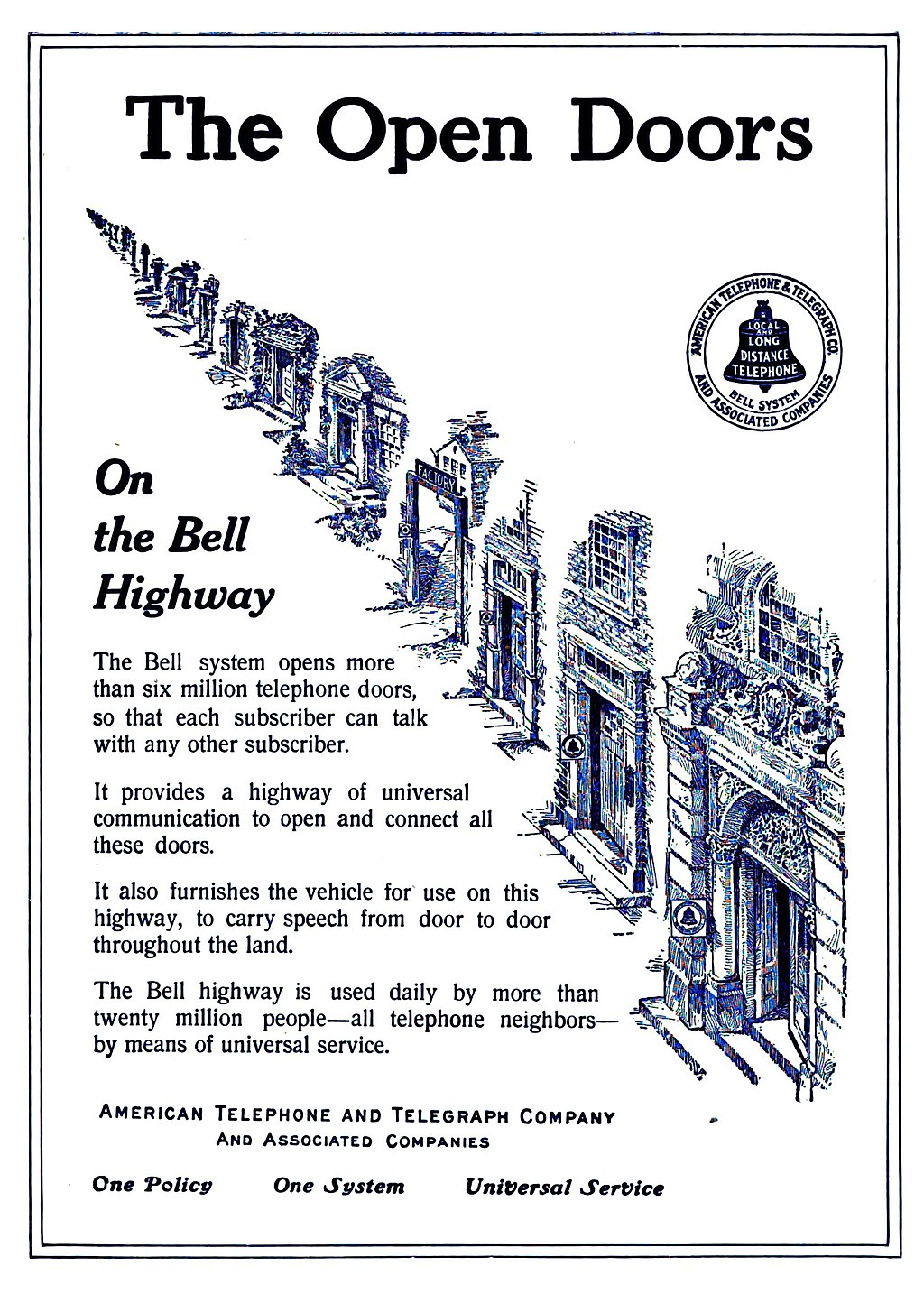
The company I worked for, N.W. Ayer & Son, became the advertising agency of Bell System in 1906. (I’m old, but not so old that I was there at that time). Our early ads for Bell were paragons of simplicity, using analogs to foster realization of “invisible” service.

1024px-Bell_System_advertisement_in_Western_Electric_v1no1_News_March_1912_promoting_universal_service.jpg

By the 1960’s, Ayer utilized other analogues, with the goal of encouraging system usage.

d88bf5726758c8e2d6f6e7a4e9b152e8.jpg

“Next best thing” was apt, but didn’t cut it. Bell System usage fell short of potential.

Ayer learned from the callers’ standpoint that “next best thing” made them instead think about the “real thing” of being there. We also learned that many folks heard an “invisible clock” ticking in their heads, even before picking up the phone. Often, this mental affect deterred people from making a call, even before picking up the phone.

We needed to get much closer to the human truth of what a phone call means to people. Ayer figured out how to do it for them, and with them, with spectacular results.

For that story, look for my next Admeritus post, coming soon on a computer near you!


Dream Worker

Hardtalk-ATT.jpg

26 years ago, I received a “dream” assignment. Bell Labs invited my agency, NW Ayer, to come interview their scientists. The purpose was to assess potential opportunities to promote the reputation of AT&T. I was set loose in their ivory towers, quizzing brilliant academics who searched for fundamental scientific discoveries. Subsequent marketing insights then gave birth to a legendary ad campaign, themed “You Will.” It was prescient; we all now live its promise. The journey to this breakthrough effort was not a cake walk. Quite the contrary, our teams ran into (and overcame) daunting obstacles – before, during and after the campaign itself. Proving that the future does not come easy, but it does come. reputation campaigns interviewing transformations #perseverance

25 Years Ago, AT&T Predicted the Future We’re Living Now

https://www.fastcompany.com/90275679/att-accurately-predicted-the-future-in-1993-what-can-we-expect-now-25-years-latern

How It All Began

936e464615e84f32172e675bde86d8d6.jpg

How what all began? Advertising. For me. As a career. And a craft.

My summer job during my college years was building and installing signs for business. Like the one you see above. It was a blue collar job, hard work, occasionally hazardous.

I learned a lot during my labors, about construction, electricity, and profuse sweating. (Not to mention profuse swearing, which was the specialty of one of my bosses, Mike).

From Joey, my other boss, I also learned this work was called “commercial advertising.” Though I’d seen signs at businesses my whole life, I’d never really thought about their purpose, other than to identify the location by name.  Their main purpose is advertising.

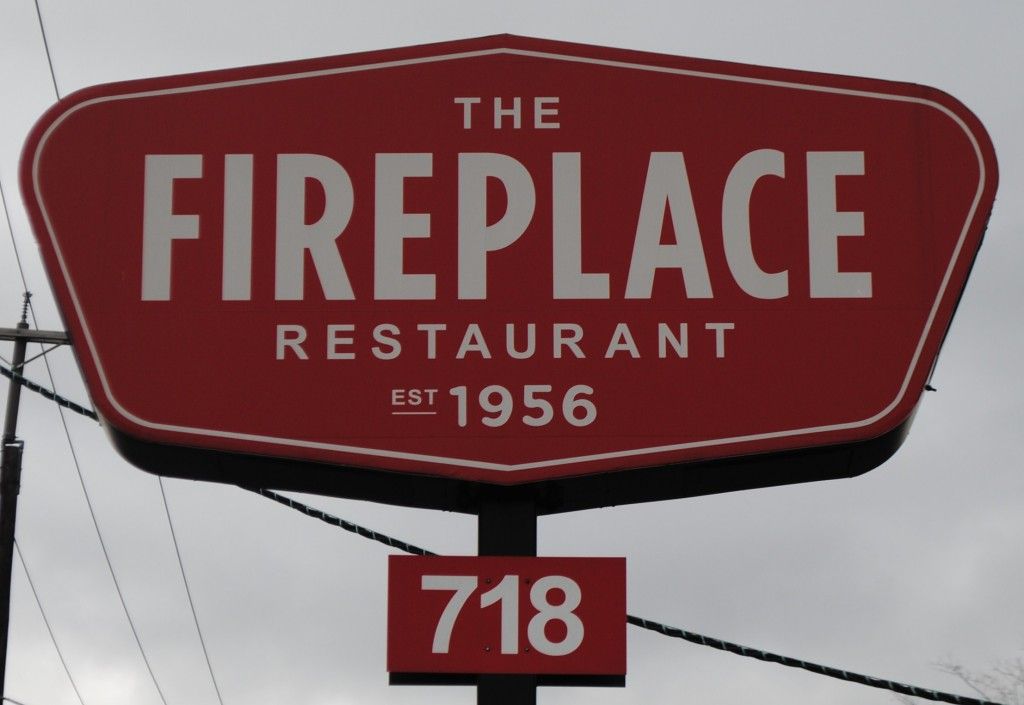
The Fireplace sign advertises their location as a Restaurant. That won’t make you hungry, but it may appeal to you if you are hungry, so you can give it a try.  Est 1956 communicates the restaurant has been there for decades. That won’t make you hungry, but it implies a lot of folks must like it, because it’s remained in business so long.

And yes, if you’d expect flame-broiled burgers there, you’d be exactly right. Great ones!

That’s how my advertising career began when I was 18. It continued for five decades. The connections between businesses and people via communication never ceased to engage me, with curiosity, with creativity, and with an endless appetite to build a bond.